what states are require to record interrogations by law
Washington State Laws and Recommendations on Trunk-Worn Cameras
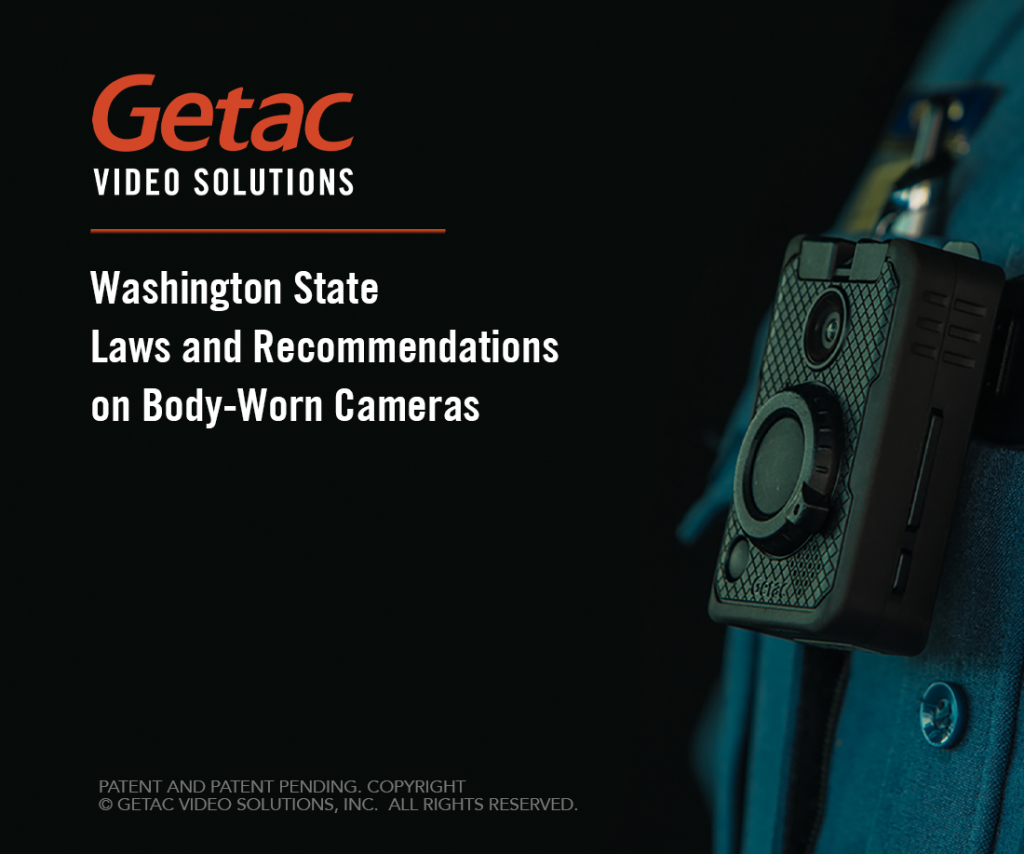
Washington State'south Newest Body-Worn Camera Policies
On May 18th, 2021, Governor Jay Inslee signed Substitute Firm Bill 1223- The Uniform Electronic Recordation of Custodial Interrogations Act. This new legislation impacts every Police Enforcement Officer in Washington Country. In short, HB1223 requires either sound or sound & video recording of any custodial interrogation of any minor or any interrogation related to a felony crime (Department iii). As explained in the nib, "A custodial interrogation at a jail, police force or sheriff's station, holding cell, or correctional or detention facility must be recorded by audio and video means. A custodial interrogation at any other identify of detention must be recorded by audio means at minimum." Recording at a jail or station can probable be achieved past the systems currently in identify with many, if not well-nigh, Police force Enforcement Agencies in the state. Custodial interrogations at "any other place" offering a unique operational challenge, however. Since the proposal of this bill, many agencies in the state have interpreted this bill every bit a first step toward mandating body-worn cameras. While the requirement is only for audio recordings outside of jails, interview rooms, etc, deploying body-worn cameras to tape sound and video should be considered. Section 15 states, "Each law enforcement agency that is a governmental entity of this land shall adopt and enforce policies and procedures to implement this chapter."
This section continues on to outline the details of the required procedures, including systems to maintain concatenation of custody that policies should specify, "standards for the angle, focus, and field of vision of a recording device which reasonably promotes the accurate recording of a custodial interrogation at a identify of detention and reliable assessment of its accurateness and completeness." As written, information technology may be possible to deploy audio records to Law Enforcement Officers to use when not in areas covered under Section 3, but to encounter all the authoritative requirements outlined in this Chapter, the software systems built to support modern torso-worn cameras solutions would make for easier and low-risk implementation. Additionally, interrogations captured on audio recorders take few exceptions to public disclosure. Body-worn cameras recordings, withal, are covered by exceptions outlined in Rev.CodeWash.(ARCW)§42.56.240(covered later in this article). When adopting policies and procedures to implement this Chapter, agencies should be especially aware of the intricacies required by this new legislation. Section 4 outlines that consent is not required to conduct an electronic recording of a person being interrogated, but it does state the discover must be given. Most agencies, when deploying body-worn camera programs, introduce into the grooming that every citizen contact begins with the LEO stating, "My name is ___. You are being audio and video recorded right now." This should exist reflected in policies and preparation for all officers. Compliance with this Affiliate largely overlaps with Rev. Lawmaking Wash. (ARCW)x.109.010-Use of Body Worn Cameras. By following Rev. Code Launder. (ARCW)10.109.010, most agencies will be in compliance with the bulk of the requirements of HB1223. Section 6 outlines that an electronic recording need not take place, "if the individual to exist interrogated indicates that the individual will not participate in the interrogation if it is recorded electronically." At the end of Department 6, it is made clear, "A police force enforcement officer, with intent to avoid the requirement of electronic recording in section 3 of this act, may not encourage an individual to request that a recording not exist made."
Information technology should be noted, while HB1223 requires the creation of these electronic recordings, it offers no guidance on proper memory periods for these records. To determine this, an agency should assess Rev. Lawmaking Wash. (ARCW)42.56.240-Investigative, law enforcement, and criminal offence victims, which details a minimum threescore-day retentivity period for audio or video captured with a trunk-worn photographic camera (audio-only devices are non specifically mentioned). Many agencies in the state accept been hesitant to adopt body-worn cameras, non out of fright of transparency, but out of concern for denizen privacy and unpredictable staffing costs due to public disclosure laws in Washington land. To remedy this, Rev. Code Wash. (ARCW) 42.56.240 was amended with exemptions for video/sound captured by police body-worn cameras. In department 14 of Rev. Lawmaking Wash. (ARCW) 42.56.240, no less than 10 circumstances are listed that exempt trunk-worn camera video from public disclosure. Each of these exemptions should be assessed by an agency prior to purchasing or deploying a body-worn camera program. For instance, Section 14(b)(vi), which pertains to recordings of victims or witnesses of sexual set on or domestic violence state, "If at the fourth dimension of recording the victim or witness indicates a want for disclosure or nondisclosure of the recorded identity or communications, such desire shall govern." Different Section vi of House Bill 1223, however, Rev. Code Wash. (ARCW) 42.56.240 does not state that an officer cannot encourage an individual to request their advice be exempt from disclosure. As such, it is recommended that whatever BWC policy and grooming cover this exemption and so officers can encourage witnesses/victims covered by this exception to asking non-disclosure. Farther Rev. Code Wash. (ARCW) 42.56.240 states-"(d) A request for torso-worn camera recordings must:
(i) Specifically identify a name of a person or persons involved in the incident;
(ii) Provide the incident or case number;
(3) Provide the engagement, fourth dimension, and location of the incident or incidents; or
(iv) Identify a law enforcement or corrections officer involved in the incident or incidents."
These requirements lone greatly reduce the types of PDRs that are valid. In Department east, more requirements are outlined. Section e(i) describes those entitled to copies of recordings, regardless of the higher up-mentioned exemptions. If somebody is a field of study of the video, for instance, they are entitled admission to a copy. If a recording is covered by Section eastward(i), the requester cannot exist charged for the price of redacting and releasing the video under Section (east)(two). In Section (e)(3), agencies are given the ability to require a requestor to place themselves every bit part of their PDR for the body-worn camera video. Together, these requirements essentially eliminate mass requests, anonymous requests, or non-specific requests (such as, "Every DUI end from the last 30 days"). The concluding protection granted to agencies nether Washington Codemakesbody worn camera programs an option for Washingtonagencies inSection (f)(i). Under this section, "A law enforcement or corrections bureau responding to a asking to disclose body-worn camera recordings may require any requester not listed in (e) of this subsection to pay the reasonable costs of redacting, altering, distorting, pixelating, suppressing, or otherwise obscuring any portion of the body-worn camera recording prior to disclosure only to the extent necessary to comply with the exemptions in this chapter or any applicable law." As many know, video redaction tin be a time-consuming process. While information technology is up to each agency to determine what is a "reasonable price of redacting," many agencies in the land consider the hours information technology takes a trained employee and the rate at which that employee is paid when determining their BWC video disclosure costs.
While legislation is non currently requiring body-worn cameras in Washington country, information technology is probable that they will be required at some point. HB1223 has essentially fabricated information technology very inconvenient and somewhat risky for Washington agencies to non take body cameras. On the federal stage, there is active legislation that volition make body-worn cameras mandatory for federal officers(see George Floyd Justice in Policing Human action of 2021). Additionally, many states are passing legislation that requires Torso-Worn Cameras for all peace offices, including statutorily requiring memory periods. Furthermore, boosted states like Nevada have required body-worn cameras for years. The legislation that has passed in Washington state creates reasonable conditions for agencies of any size to program, adopt, and deploy a body-worn photographic camera solution.
Disclosure-All conclusions and opinions given here are made past Jay Newbern. Jay is the Video Solutions Managing director for Getac Video Solutions, a vendor of body-worn cameras, in-car cameras, and interview room systems. Recommendations made hither are not legal advice and should ultimately be reviewed by agency control staff and legal counsel.
Source: https://getacvideo.com/washington-state-laws-and-recommendations-on-body-worn-cameras/
0 Response to "what states are require to record interrogations by law"
Post a Comment